


Orgueil Meteoritenfall Gemälde
Orgueil Meteoritenfall Gemälde
140,00 €
Produktinformationen "Orgueil Meteoritenfall Gemälde"
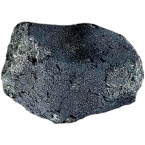 Orgueil ist ein wissenschaftlich wichtiger kohlenstoffhaltiger Chondrit-Meteorit, der 1864 im Südwesten Frankreichs fiel. Er ist am 14. Mai 1864, kurz nach 20:00 Uhr Ortszeit, in der Nähe von Orgueil in Südfrankreich gefallen. Etwa 20 Steine fielen über eine Fläche von mehreren Quadratkilometer. Ein Exemplar des Meteoriten wurde im selben Jahr noch von François Stanislaus Clöez, Professor für Chemie am Musée d'Histoire Naturelle, analysiert. Er konzentrierte sich hauptsächlich auf die organische Substanz, die in diesem Meteoriten gefunden wurde. Er schrieb, dass der Meteorite Kohlenstoff, Wasserstoff und Sauerstoff enthielt. Seine Zusammensetzung war sehr ähnlich dem Torf aus dem Somme -Tal oder der Braunkohle von Ringkohl bei Kassel. Eine intensive wissenschaftliche Diskussion folgte, bis in die 1870er Jahre, ob die organische Substanz einen biologischen Ursprung haben könnte.
Orgueil ist einer von fünf bekannten Meteoriten der CI-Chondrit-Gruppe, wobei dies der größte (14 Kilogramm (31 Pfund)) ist. Diese Gruppe ist bemerkenswert für eine Zusammensetzung, die im wesentlichen identisch mit der der Sonne ist, mit Ausnahme von gasförmigen Elementen wie Wasserstoff und Helium.
Wegen seiner außerordentlich primitiven Komposition und der relativ großen Masse ist Orgueil einer der am meisten untersuchten Meteoriten. Eine bemerkenswerte Entdeckung in Orgueil war eine hohe Konzentration von isotopisch anomalem Xenon namens "Xenon-HL". Der Träger dieses Gases ist extrem feinkörniger Diamantstaub, der älter ist als das Sonnensystem selbst, bekannt als Presolarkörner.
 | Orgueil Meteoritenfall Gemälde (siehe Beschreibung) |
Wissenschaftliche Arbeiten zum Almahata Sitta Meteorit (Asteroid 2008 TC3) mit unserer Mitwirkung
Publikationen
- Goodrich, F. M. McCubbin, A. Bischoff, S. Decker, and J. W. Boyce: Non-Chondritic Volatile Signatures in a Ureilite Trachyandesite
- Bischoff A., Horstmann M., Barrat J.-A., Chaussidon M., Pack A., Herwartz D., Ward D., Vollmer C., and Decker S., 2014: Almahata Sitta samples MS-MU-001-028: Trachyandesitic volcanism in the early Solar System
- V.H. Hoffmann, K. Wimmer, R. Hochleitner, M. Kaliwoda, M. Funaki, M. Torii, S. Decker: Almahata Sitta Magnetic Susceptibility Database - Update of the Enstatite Chondritic Lithologies
Präsentationen
Poster
- A. Bischoff, M. Horstmann, A. Pack, D. Herwatz, and S. Decker, 2013: Almahata Sitta sample MS-MU-011: A rapidly crystallized basalt from the crust of the ureilite parent body
- A. Bischoff, A.-K. Krämer, K. I. Klemm, and S. Decker, 2018: Almahata Sitta sample MS-MU-039-045: News from the Almahata Sitta strewn field - Seven new samples: Three ureilites, three enstatite chondrites, and one ordinary chondrite
- Viktor H. Hoffmann, R. Hochleitner, M. Kaliwoda, M. Funaki, M. Torii, A. Bischoff, S. Decker: Almahata Sitta samples MS-MU-001-028: Almahata Sitta meteorite - The space "Rosetta" stone
- V.H. Hoffmann, K. Wimmer, R. Hochleitner, M. Kaliwoda, M. Funaki, M. Torii, S. Decker: Almahata Sitta Magnetic Susceptibility Database - Update of the Enstatite Chondritic Lithologies
Abstracts
- V.H. Hoffmann, Hochleitner R., Kaliwoda M., Decker S.: Almahata Sitta samples MS-MU-001-020: Almahata Sitta meteorite - The space "Rosetta" stone
- A. Bischoff, A.-K. Krämer, K. I. Klemm, and S. Decker, 2018: Almahata Sitta sample MS-MU-039-045: News from the Almahata Sitta strewn field - Seven new samples: Three ureilites, three enstatite chondrites, and one ordinary chondrite
- V.H. Hoffmann, M. Kaliwoda, R. Hochleitner, M. Funaki, S. Decker: Almahata Sitta samples MS-MU-001-028: A real space rosetta stone - The Almahata Sitta meteorite
- V.H. Hoffmann, M. Funaki, M. Torii, Hochleitner R., Kaliwoda M., Decker S.: Almahata Sitta samples MS-MU-001-020: A new Almahata Sitta sample set - The story becomes more fascinating
- T. Mikouchi, A. Takenouchi, M. E. Zolensky and V. H. Hoffmann: Almahata Sitta samples MS-MU-011-012: Formation conditions of two unusual rocks from the ureilite parent body
- Bischoff A., Horstmann M., Pack A., Herwatz D., and Decker S., 2013: Almahata Sitta sample MS-MU-011: A rapidly crystallized basalt from the crust of the ureilite parent body
- Bischoff A., Horstmann M., Vollmer C., Heitmann U., and Decker S., 2013: Almahata Sitta samples MS-MU-012-020: New individuals from the Almahata Sitta strewn field: Old friends and brand-new fellows
Weitere wissenschaftliche Arbeiten zum Almahata Sitta Meteorit (Asteroid 2008 TC3)
Publikationen
- Addi Bischoff, Marian Horstmann, Andreas Pack, Matthias Laubenstein and Siegfried Haberer: Asteroid 2008 TC3 - Almahata Sitta: A spectacular Beccia containing many different Ureilitic and Chondritic Lithologies
- Marian Horstmann, Addi Bischoff, Andreas Pack and Matthias Laubenstein: Almahata Sitta-Fragment MS-CH: Characterization of a new Chondrite Type